
Where to look
- Chiswell Islands: horned puffin, tufted puffin, humpback whale
- Harding Icefield Trail: mountain goat, black bear
- Seward small boat harbor: steller sea lion, sea otter
- Resurrection Bay: steller sea lion, humpback whale
Grouped from the National Park Service “where” notes for each animal below.
Compare these animals with other parks, month by month, in the national park Wildlife finder.
-

(c) Ross Donihue, some rights reserved (CC BY), uploaded by Ross Donihue · iNaturalist Mountain goat
Oreamnos americanus
- Where
- Harding Icefield Trail
- Best season
- Late spring and summer.
- Stay back
- Minimum 25 yards; do not approach, follow or feed.
-
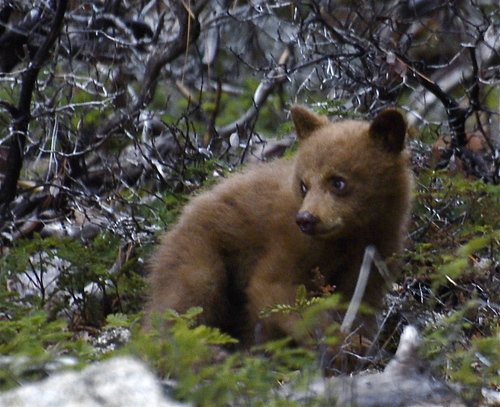
(c) Jay Pruett, some rights reserved (CC BY) · iNaturalist Black bear
Ursus americanus
- Where
- Harding Icefield Trail
- Most often reported
- May–Jun, Sep (its biggest share of park sightings on iNaturalist)
- Stay back
- Minimum 300 yards from bears; no feeding.
-

(c) mikaelsoderberg, some rights reserved (CC BY) · iNaturalist Moose
Alces alces
- Where
- Exit Glacier
- Best season
- Winter
- Stay back
- Minimum 25 yards; do not approach, follow or feed.
-
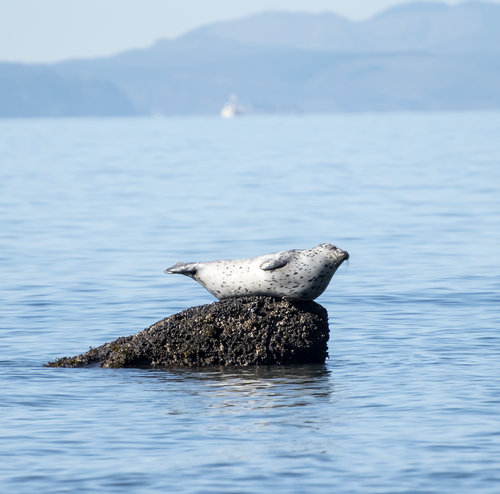
(c) David Badke, some rights reserved (CC BY-SA) · iNaturalist Harbor seal
Phoca vitulina
- Where
- Aialik Bay
- Best season
- June pupping season; August–September fall molt
- Stay back
- Generally at least 100 yards from marine mammals; no disturbance.
-

(c) Tuoichen, some rights reserved (CC BY), uploaded by Tuoichen · iNaturalist Steller sea lion
Eumetopias jubatus
- Where
- Seward small boat harbor; Resurrection Bay
- Most often reported
- Aug (its biggest share of park sightings on iNaturalist)
- Stay back
- Generally at least 100 yards from marine mammals; no disturbance.
-
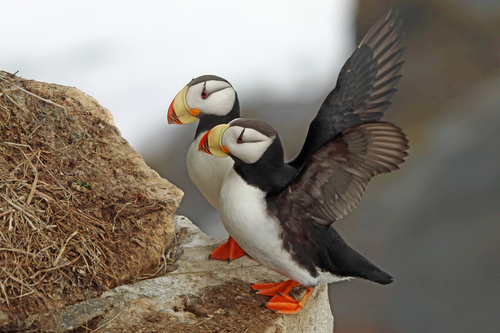
(c) Nigel Voaden, some rights reserved (CC BY) · iNaturalist Horned puffin
Fratercula corniculata
- Where
- Chiswell Islands
- Most often reported
- Aug (its biggest share of park sightings on iNaturalist)
- Stay back
- Minimum 25 yards; do not approach, follow or feed.
-
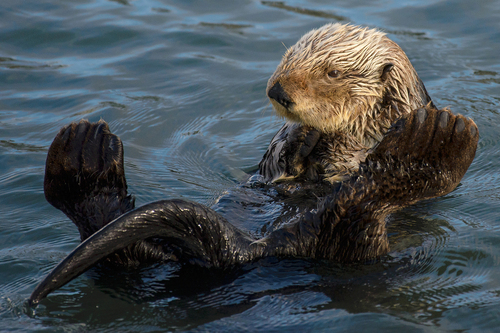
(c) Marshal Hedin, some rights reserved (CC BY-SA) · iNaturalist Sea otter
Enhydra lutris
- Where
- Seward small boat harbor; waters between the harbor and just north of Caines Head
- Most often reported
- Jun, Aug (its biggest share of park sightings on iNaturalist)
- Stay back
- Generally at least 100 yards from marine mammals; no disturbance.
-
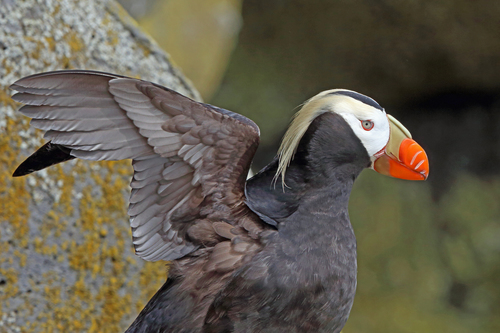
(c) Nigel Voaden, some rights reserved (CC BY) · iNaturalist Tufted puffin
Fratercula cirrhata
- Where
- Chiswell Islands
- Best season
- Arrive around mid-May
- Stay back
- Minimum 25 yards; do not approach, follow or feed.
-
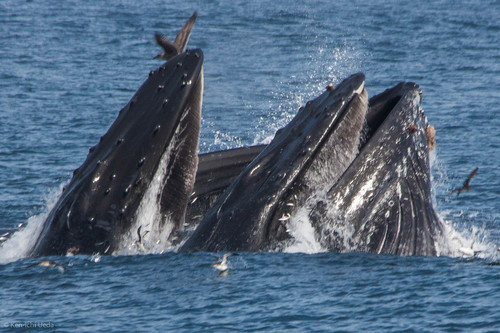
(c) Ken-ichi Ueda, some rights reserved (CC BY) · iNaturalist Humpback whale
Megaptera novaeangliae
- Where
- Resurrection Bay; Chiswell Islands
- Best season
- Mid-April–November feeding season
- Stay back
- Generally at least 100 yards from marine mammals; no disturbance.
-

(c) Martín Acosta Albarracín, some rights reserved (CC BY), uploaded by Martín Acosta Albarracín · iNaturalist Orca
Orcinus orca
- Most often reported
- Jul–Aug (its biggest share of park sightings on iNaturalist)
- Stay back
- Generally at least 100 yards from marine mammals; no disturbance.
Where, season and viewing rules come from the National Park Service pages linked on each animal. Where the NPS names a best season, we show that. Otherwise “Most often reported” gives the months when the animal makes up its largest share of iNaturalist research-grade sightings in the park (retrieved Nov 5, 2026). Animals that live here all year can show winter months there simply because fewer other animals are reported then; it is not a guarantee of a sighting. For live sightings and current alerts, use the Wildlife finder.
Planning a trip to see them? See camping in Kenai Fjords, or where to stay near Kenai Fjords. The Kenai Fjords guide has the itinerary, permits, and (where we have them) guided-tour options.
See wildlife with a guide
Affiliate link: we may earn a commission, at no extra cost to you. How this works