HaleakalāPrintable packet
Haleakalā, on paper
Entry, hours, permits, rules, maps and safety from our sourced guide, in one file to print or save before you lose signal.
Compiled by National Park News from National Park Service data
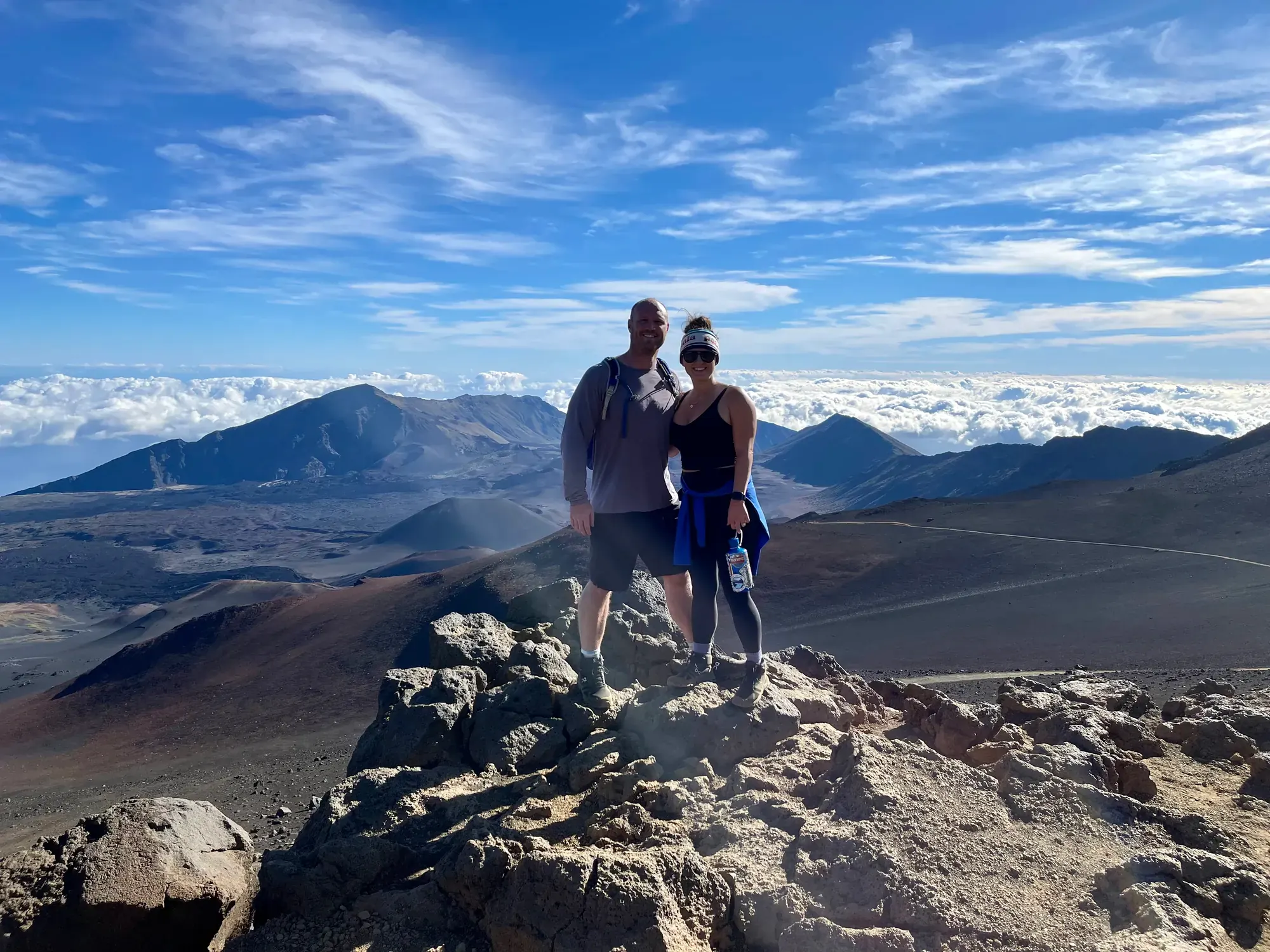
Haleakalā · Photo: David & Keri New
Offline packet · Hawaii
Haleakalā National Park
Checked: Guide facts Nov 20, 2026 · Maps & sights Nov 1, 2026 · Camping details Nov 1, 2026. Rules and conditions change; confirm on nps.gov before you go. Printed from thenationalparknews.com/parks/haleakala/.
For offline maps, download the park in the free official NPS App.
Emergency
- Emergency: call 911.
- Wilderness: Daytime temperatures run 40-70°F and nights 30-50°F, and it can rain any month. There’s no dependable natural water. Carry 3-4 liters per person per day. Emergency dispatch: 808-985-6170.
- Park website: https://www.nps.gov/hale/
Emergency card
- Emergency number
- Park emergency communication center: 808-985-6170 (emergencies only) Source
- Cell coverage
- No cell service in Haleakalā Crater; very limited at trailheads. Source
- Radio / satellite
- Emergency signal devices work in the crater but should not be relied on alone. Source
- Compass
- Magnetic declination at park center, mid-2027: 9.3° E (NOAA WMM2025) Source
What to tell dispatch (NPS) Source
- GPS coordinates from your phone, if available
- Name of the trail or area of the park where you started your activity
- Your last known location before you became lost
- Description of your surroundings including visible landmarks
- Types and colors of clothing you are wearing
- Equipment you are carrying
- Any medical conditions you may have
Time zone
- No daylight saving time: clocks here do not change in March/November, so the offset to mainland DST-observing states changes by an hour seasonally. Source
Entry & fees
- Entry
- January 1–December 31, 2026: a $1 vehicle reservation is required for Summit District entry from 3 to 7 am HST. Book online on Recreation.gov 60 days or 2 days ahead at 7 am HST. No sunrise reservation is required outside these hours; sunset has no reservation system. Hosmer Grove reservations include sunrise access the next morning. The system is year-round; no separate 2027 announcement was found.
- Fees
- $30 per private vehicle; $25 for up to two motorcycles with four total occupants; $15 per person on foot or bicycle, age 16+. Under 16 free. Entrance is valid three days in both districts. Park annual and Hawaiʻi Tri-Park annual passes are listed at $55. America the Beautiful: resident annual $80; nonresident annual $250; senior annual $20 or lifetime $80; military annual/lifetime, Access, fourth-grade and qualifying volunteer passes free. Confirm commercial vehicle capacity categories and applicable fees with the park. Credit/debit only.
Hours
- Park hours
- The Summit and Kīpahulu districts are open 24 hours a day. A sunrise reservation is required to enter the summit district between 3 am and 7 am.
- Visitor centers
- Headquarters Visitor Center (near the entrance): 8:30 am-4:30 pm, with water around the clock. Haleakalā Visitor Center: sunrise to noon. Kīpahulu Visitor Center: 9 am-5 pm. All are open daily, staff permitting, and drinking water is available at all three.
Getting there
- Summit District
- From Kahului, take Routes 37, 377 and 378. For GPS, use 30,000 Haleakalā Hwy, Kula, HI 96790. From the entrance station, the summit is 11 mi and about 30 minutes away, climbing 3,000 ft more. Typical drive times from the FAQ: Kahului 45 min-1 hr, Kīhei 1-1.5 hr, Lāhainā 1.5-2 hr.
- Kīpahulu District
- 12 mi past Hāna on the Hāna Highway (Routes 36, 360 and 31). For GPS, the FAQ gives Mile Marker 42, Hāna Hwy (the directions page says Mile Marker 41). Allow 2.5-3 hours from Kahului or Kīhei, and 3-4 hours from Lāhainā. Obey the ‘blow horn’ signs.
- Gas, EVs & transit
- No gas in the park. The last gas on the way to the summit is in Pukalani. There are no EV chargers, and the NPS says EVs with a full charge have failed to reach the summit. No public transit serves either district.
- Mountain driving
- No lights or guardrails. Use pullouts, use low gear on the way down, and use headlights in clouds. Watch for endangered nēnē and ʻuaʻu on roads and in parking lots.
Official maps
Download these before you lose signal.
Permits & reservations checklist
- Sunrise reservation (Summit District, 3–7 am HST). When: Year-round. Released 60 days and 2 days ahead at 7 am HST; valid only on the reserved date.. Fee: $1 per vehicle + entrance fee · Apply
- Wilderness cabins (Hōlua, Kapalaoa, Palikū). When: Up to six months ahead. Maximum three consecutive nights; all park overnight stays limited to three nights per 30 days.. Fee: $75 per cabin per night · Apply
- Wilderness tent sites (Hōlua, Palikū). When: Up to six months ahead. Maximum three consecutive nights; all park overnight stays limited to three nights per 30 days.. Fee: $20/site/night. Partial refunds may apply, less $10; late cancellations also forfeit the first night. No cancellation or modification after printing the permit. · Apply
- Hosmer Grove Campground. When: Advance reservations required; release window not published on reviewed pages. All park overnight stays limited to three nights per 30 days.. Fee: $20 per site per night · Apply
- Kīpahulu Campground. When: 30-day rolling reservations. Maximum three consecutive nights; all park overnight stays limited to three nights per 30 days.. Fee: $20 per site per night · Apply
- Weddings and special events. When: At least three weeks ahead; complex requests need at least four weeks.. Fee: $150 application + possible monitoring · Apply
- Scattering of ashes. When: At least three weeks ahead.. Fee: $25 application · Apply
- First Amendment activities. When: Allow at least two days.. Fee: Free · Apply
Sample 2-day plan
Our rule of thumb from this guide’s data (9 walks / trails, 2 scenic drives, 4 areas or entrances listed in this guide), not a firsthand recommendation.
- Day 1: Summit District: Summit road + Leleiwi Overlook
- Season: Open year-round; summit entry between 3 am and 7 am requires a sunrise reservation.
- Start: Headquarters Visitor Center (near the entrance): 8:30 am-4:30 pm, with water around the clock.
- Drive: Summit road (Routes 377/378 into the park): Winding, steep road through endangered-species habitat to overlooks at Leleiwi, Kalahaku, Haleakalā Visitor Center (9,740 ft) and Puʻuʻulaʻula / Red Hill (10,023 ft).
- Hike: Leleiwi Overlook: 0.3 mi round trip · 100 ft gain · Easy
- Hike: Pā Kaʻoao: 0.4 mi round trip · 100 ft gain · Easy
- See: Puʻuʻulaʻula: Stairs or steep ramp to observation deck
- Running late? Drop: Pā Kaʻoao
- Overnight base: Kula or Hosmer Grove Campground
- Day 2: Kīpahulu District: Hāna Highway to Kīpahulu + Pīpīwai Trail to Waimoku Falls
- Transfer: Summit District to Kīpahulu District: check the official route before travel.
- Season: Open year-round.
- Drive: Hāna Highway to Kīpahulu: The famous coastal road around northeast Maui, ending 12 mi past Hāna at ʻOheʻo Gulch.
- Hike: Pīpīwai Trail to Waimoku Falls: 4 mi round trip · 800 ft gain · Moderate to strenuous
- Running late? Drop: Pīpīwai Trail to Waimoku Falls
- Overnight base: Hāna; check campground availability before choosing an overnight stay.
Key rules for 2026
- Sunrise reservations. Required to enter the Summit District from 3 to 7 am HST. They cost $1 per vehicle and are online only. They’re released 60 days ahead at 7 am HST and often sell out within 15 minutes, with more released 2 days ahead. You’re limited to 1 per 3-day period, with no refunds for weather. Bring a printout plus photo ID. 150 vehicles are allowed. The entrance fee is separate.
- ʻOheʻo pools closed to swimming. The Pools of ʻOheʻo can’t be entered. View them from the Kūloa Point Trail. Entering any stream in the park is prohibited at the campground and not recommended anywhere because of flash floods and rockfall.
- On-trail park; no sleeping in cars. Stay on designated trails to protect silverswords and other endemic species. Overnight stays are allowed only in designated campsites and cabins, and sleeping in a vehicle elsewhere is prohibited. Overnight stays are capped at 3 nights per 30 days across the whole park.
- Rapid ʻŌhiʻa Death. Coming from the Big Island? Clean the dirt off your shoes, clothing and gear and spray them with 70% alcohol before hiking in native forest.
Pets
- Where dogs are allowed
- Dogs may use parking lots, roadways and paved pathways. They may not use trails or Hosmer Grove Campground.
- Kīpahulu Campground and leash
- Pets are allowed within the campground and on campground roads on a leash no longer than six feet. Dogs are prohibited on trails.
- Buildings and supervision
- Dogs must not enter park buildings or be left unattended. Working guide dogs accompanying a person with a disability are permitted in buildings; consult a ranger about trail access.
- BARK Ranger
- The NPS pets page identifies a service dog becoming a Junior Bark Ranger. Current enrollment steps and badge or tag requirements are not published there.
Safety
- Altitude
- Trails start at 8,000-9,740 ft. Watch for nausea, headache, dizziness and shortness of breath. Hypothermia is a danger even in summer.
- Flash floods (Kīpahulu)
- Streams can rise 4 ft in 10 minutes and have washed people out to sea. Stay out of the streams and closed areas.
- Wilderness
- Daytime temperatures run 40-70°F and nights 30-50°F, and it can rain any month. There’s no dependable natural water. Carry 3-4 liters per person per day. Emergency dispatch: 808-985-6170.
- Wildlife on roads
- Nēnē (Hawaiian geese) and ʻuaʻu (Hawaiian petrels) nest in the park and land on roads. Don’t feed them.
- Cyclists
- Bikes are allowed on paved roads only, with no bike lane. Hypothermia is common on the descent.
Compiled from the sourced Haleakalā guide on thenationalparknews.com. Follow the guide for official sources and current updates. Track the parks you’ve visited on the 64-park checklist.